In my first report on the 5th International Plant-Based Nutrition Healthcare Conference (PBNHC), which I was enormously privileged to attend in September 2017, I’m going to focus on 3 presentations that pivot around the question ‘How and why do people change their health habits?’
As a lifestyle medicine practitioner, this is a question that has preoccupied me for over 20 years. Many of my clients already know they should be eating better, exercising regularly and getting enough sleep, but day after day, they find themselves repeating the same old bad habits. They read books on nutrition and take up a gym membership to try to motivate themselves to change; they beat themselves up when they binge on junk food and feel sick afterwards; they live with the constant fear that their bad habits will lead to cancer or a heart attack, just like their Mum or Dad had… and still they don’t change.
We live in an age in which all the information that we need to improve our health is literally at our fingertips – just a Google search away, as long as you have the know-how to sort the proverbial wheat from the chaff – but knowing you should change doesn’t make you change.
So I was really chuffed when PBNHC co-founder, Dr Scott Stoll (who just has to be one of the nicest people on the planet :)) opened the conference with a keynote titled ‘The Science and Psychology of Fat to Fit’, which focused on that all-important process of change. Scott summarised what he had learnt about why and how people change, by walking the audience through the incredible story of Milan Ross, who joined him on the stage to discuss his remarkable health transformation.
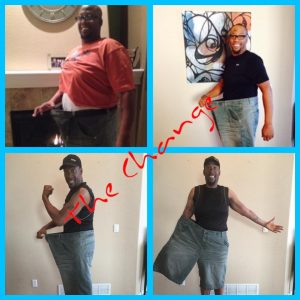
Milan’s story was featured in the hit documentary Eating You Alive. Having maintained a healthy weight and good fitness level until the age of 24, Milan slowly began to gain weight on the typical American diet. Eventually, having ballooned to over 500 pounds (227 kg) and suffering from diabetic neuropathy, high blood pressure and high cholesterol, he took a job at Whole Foods because of their generous health insurance.
He had tried various diets but never found any way of eating that was sustainable for him, so Milan became good at playing the role of the ‘jolly fat guy’. But then came the day that changed everything for him. His son was desperate to go on the Harry Potter ride at a Florida theme park with him, but Milan could not fit into the ride seat. Amidst his son’s distraught wailing and his abject humiliation at being too fat to ride, Milan made a promise to himself that he would never let his son down again.
His poor health status made Milan eligible to attend one of four intensive lifestyle change programs that Whole Foods makes available free of charge, to their highest-risk employees. He signed up for the retreat run by Scott Stoll, where he learned how to adopt the wholefood plant-based diet and and exercise program that enabled him to lose over 200 pounds (90 kg) and more than 30 inches (76 cm) off his waist, to get off all his medications and completely resolve his diabetic neuropathy – a condition that’s considered incurable, and for which there is no effective medical management.
The acceptance, support and belief in his capacity to change that Milan experienced from the other retreat participants, and the staff, was crucial in persuading him that he really could break up with unhealthy food, adopt a completely new way of eating, and begin to use his body again.
When he got home, his wife agreed to go ‘all in’ with him, providing him with the support he needed to continue with the lifestyle changes he had begun at the retreat. And of course, as he lost weight, got off his medications, said goodbye to his chronic pain and rediscovered the joy of movement, the benefits he was experiencing motivated him to continue on with the changes he had made, and to amp up his diet and exercise program to a new level.
Needless to say, people around him noticed the changes in Milan, and he began coaching others who were struggling with obesity and ill-health, eventually developing his own wellness business.
So what were the key elements in Milan’s process of change?
Pain, love and joy.
The pain of humiliation and letting down his son was the fire alarm that woke him up to the fact that he just had to change.
But it was love and joy that helped him find the path he needed to follow, and to stick with it. His love for his son and determination to never let him down again caused him to apply for Scott Stoll’s retreat. The love he experienced from the people he met there helped him feel strong enough to change. The love of his wife facilitated him in making his diet and lifestyle changes permanent. He began treating his body with loving care, rediscovered his love of movement, and expressed his love for others by helping them to make the life-transforming changes that he had made.
Out of this came a joy that he had forgotten he could experience… and it culminated when he was able to return to that Florida theme park and go on the Harry Potter ride with his son. As he played the video of his son’s reaction after finishing that ride, I don’t think there was a dry eye in the house!
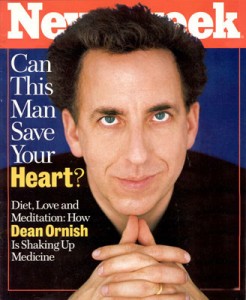
Pain, love and joy are threads that run through the fabric of Dr Dean Ornish’s personal and professional life too. His presentations are always highlights of the PBNHC, but this year Scott Stoll had something different in mind for the second night of the conference. Instead of a formal presentation, he conducted a profoundly moving in-depth interview with Dean and his wife Anne about their lives and work. Bring on ‘An Evening with Dean Ornish’.
I had heard Dr Ornish talk about the suicidal depression that he experienced as a medical student, but never in this depth and detail. His description of the mental torment he endured, as he grappled with the conviction that he was stupid and worthless, and it was only a matter of time before he was ‘found out’ and thrown out of medical school, was truly harrowing. Ultimately though, his pain triggered him to change, just as with Milan Ross, and in hindsight he has gratitude for that experience of suffering, which gave him empathy for the suffering of the patients he treats.
As a result of that empathy and understanding, Ornish has developed comprehensive and holistic lifestyle change programs for people with cardiovascular disease (or risk factors for it) and prostate cancer, and proven that they work. His programs incorporate instruction in adopting a low fat wholefood plant-based diet; moderate exercise; stress management training; and participation in in-person or online support groups.
Or, as he puts it, teaching people how to eat better, move more, stress less and love more. There’s that ‘love’ word again. Ornish often speaks about how much push-back he has received from other doctors and from the research community, for daring to talk about the importance of love in the practice of healthcare.
But when he showed a video clip of participants in his prostate cancer program, talking about the incalculable benefits they had gained from participating in support groups, I don’t think anyone in the audience could be left in any doubt that feeling loved and valued by others helps people feel better and make the right choices for their health.
And when Dean spoke about his wife Anne, who has been his partner in both life and work for decades, as “having the gift of making everything she touches more beautiful” – including himself, even though he’d always felt ugly before – I was moved to tears.
I couldn’t help but think how impoverished this world would have been if Dean had not tapped into a source of love that persuaded him not to end his life, but instead to continue at medicaI school and become the kind of doctor that sick, scared, heartbroken people really need.
Because he made the choice to face his pain, Dean allowed himself to become a conduit for love, and in the process he reconnected with joy.
Pain, love and joy.
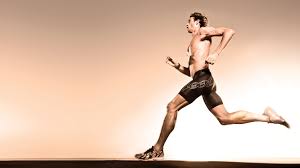
The same thread ran through the life trajectory of Rich Roll, who delivered the keynote ‘Plant-Powered Athlete’ on the final day of the conference. As a long-time subscriber to Rich’s podcast, and having read his book Finding Ultra, I’m pretty familiar with his remarkable transformation from college athlete to alcoholic to sober-but-still-food-addicted slob to super-fit Ultraman and leading advocate of a wholefood plant-based diet for health and athletic performance.
But it’s quite another thing to be in the audience while he actually tells that story, and to see every one of the nearly one thousand doctors, nurses, dietitians, psychologists, personal trainers, health coaches and other health professionals mesmerised as he took us along with him on the wild roller coaster ride of his descent into hell and his journey back to health and healing.
Rich’s transformation was prompted by physical pain – an experience of struggling to climb just 8 steps in his house, gripped with chest pain, on the night before he turned 40 – which was really just a manifestation of the emotional pain of living a life in which he felt utterly rudderless and disconnected from any higher purpose, numbing himself out every night with junk food and junk TV.
Then, as the terrifying thought struck him that he might not live to see his daughter get married, it was love for his family that spurred him into taking action – a 7-day juice cleanse that left him feeling so good, he decided to take up exercise again for the first time in decades.
As the effects of his improved diet and daily running, swimming and biking regime began to kick in, he had an utterly transformative experience during what was meant to be a half-hour trail run, but which turned into a 4-hour, 24-mile personal odyssey. During that run, Rich tapped into the pure joy of movement.
The physical strength, vitality and stamina flowing through his body that he had not experienced in decades generated a sense of euphoria. It was perhaps the first time in his life that he had felt this good, and almost certainly the first time in his life that he realised he could get high on life without needing drugs or alcohol to alter his state.
This experience set in motion a chain of events which eventually resulted in him getting out of the legal practice that was strangling his soul, and reconfiguring himself as a wellness entrepreneur with a massive social media following and one of the top ten health podcasts in the world.
Pain, love, joy. The substrates of change, which alchemically combine to transmute the dross of human suffering into the gold of a meaningful, fulfilling life, once people realise that what they’ve been doing is what led them to where they are now, and if they want to be somewhere else – somewhere better than where they are right now – they’ve got to do something different.
So what’s the pain that’s alerting you that you’re on the wrong path? What sources of love can you tap into, or how can you become a source of love to others? And what joy might be waiting for you to discover it, or rediscover it, when you change?
I’d love you to hear your story – please comment below!